Laughing and Learning: The Science Behind Classroom Fun and Easy Ways to Get Kids Giggling


Ever wondered if laughter is not just good for the soul but also for learning? Well, hold on to your lesson plans because the American Psychological Association says it is! Turns out, laughter isn't just a mood booster; it's a fantastic tool for making knowledge stick. According to Zak Stambor, laughter is like the secret sauce that boosts student participation and cranks up their attention levels.

Now, we all know the magic that happens when kids in a classroom burst into laughter – it's contagious! So, let's dive into some super easy ways to turn those giggles into golden moments of learning. Trust me, your classroom is about to become the coolest place to be!


FUNNY VOICESLet's face it, silly voices are so much fun! Here are some super easy ways to get students laughing with silly voices:

--- Have students read out loud with a partner or a small group in a silly voice. I love to have students pick different voice challenges out of a basket or bag. After they pick a voice challenge, they have to read to their partner in that voice. I promise, even your most reluctant reader will get reading and laughing!


Great news! You can find a set of 24 silly reading tasks in the Laughter and Learning Exclusive Freebie. 

Just add your info. below and check your email inbox!


    --- Read a passage from a text as a class, in unison, in a silly voice. This is especially effective during the second reading of a passage. Read the passage in "normal" voices first, then have everyone read as if they're underwater or whispering or even like a pirate. 

    --- If you read books out loud to students, you might want to experiment with some funny voices for characters. You'll get students cracking up and following along!


    FUNNY STORIES - Sharing, writing, and reading funny stories is a wonderful way to bring laughter into the classroom. Here are a few ideas:

    --- Have students write their own funny stories. You can do so with an entire writing unit like this Descriptive Writing Unit where students make up funny stories (along with research) about a wild pet. Or, you can get students laughing with Creative Writing Lessons. One of my favorites is the Write and Pass Story. This activity is super easy and very funny! All you have to do is assemble small groups of students. Give them each a piece of paper. Have them each begin a story. 


    Then, after a couple of minutes, have them fold their paper to hide the majority of what they've written. Next, they need to pass it along to someone in their group who will pick up the story where their classmate left off. 


    This process of writing and passing continues until the story ends. Then, students get a chance to read the jumbled stories. They'll be laughing for sure!

    You can find all the materials you'll need for Write and Pass Stories in this FREE Laughter and Learning Resource. Just sign up below and check your email inbox!


      --- Tell students funny stories about your own life. Bonus points if you can connect the stories to their learning!

      --- Read funny pieces of literature! There are some funny short stories in Guys Write for Guys Read, and kids love the humor in the classic story, The Ransom of Red Chief by O. Henry. Oh, and if you'd like to get kids cracking up during a read aloud, try Crash by Jerry Spinelli. Poetry can be funny, too! Some of my favorite funny poems are in this blog post.


      FUNNY TASKS - Sometimes the easiest way to get students laughing is to add a funny twist to an otherwise ordinary task. Here are my favorite ways to make traditional tasks a little funnier!

      --- Homework Twists - Let's face it, homework could use a little humor. An easy way to get students cracking up while doing their homework is with homework twists. I love to staple Homework Twist Task Cards to the top of students' paper. 


      Or, you could roll a paper homework cube that challenges students to complete their work in usual and funny ways. Don't worry, I've included the Homework Cube in the Laughter and Learning Freebie!


        --- Test Questions - The next time you're writing a test, why not include some funny phrases or situations? You might fill a comma quiz with sentences all about a befuddled zookeeper or write passages for reading comprehension about the misadventures of a mad scientist. The idea is to sprinkle some humor into an otherwise humorless task!

        --- New Positions - Often, you can get students laughing by challenging them to do their work in strange and unusual positions. Instead of doing their daily warm-ups on top of their desks, why not have them complete them on top of their heads or behind their backs? You'll get students giggling as they try to complete the task and laughing out loud when they see what their work looks like! 


        My students loved these challenges so much that I made a paper cube that we could roll to determine silly ways for students to do their work! If you'd like, I'll send you a free copy, just add your info. below.


          FUNNY GAMES - Games are a great way to get students cracking up while they are actively involved in their learning. Here are a few of my favorites:

          --- Carpool - This game is inspired by the popular Improvisational Theatre Game, "Hitchiker." I altered it slightly to use in the classroom. It's a great game to practice inferencing skills, vocabulary, and character analysis. Students LOVE this game! 

          Here's how it works. Bring four chairs to the front of the classroom. Set them up like a car with two seats in front of the other two seats. Point out the driver's seat and passenger seats to students. Explain that the game will start with 3 students in the "car." They'll need to have a conversation for about 20 seconds until they pick up another student who is carpooling with them. Before this student gets in the car, you will need to give him/her a personality trait or vocabulary word. For instance, if you are studying "A Christmas Carol," you might give him the words miser, generosity, solitude, or specter. He will be responsible for acting in a way that the other passengers can guess the word or trait he is acting out. So, if he was given the word "generosity," he might offer the passengers his shoes or volunteer to drive or suggest going to a drive-thru so he can buy them lunch. The idea is that the new passenger will continue acting until the others catch on. Then, the other passengers should start behaving in the same way. Once everyone is acting incredibly generously, the game ends. Bring new students into the car and invite another student with a new trait to be the carpool-er. 

          This game is a super funny way to help students master character traits and/or vocabulary! After you play it once, and get the entire class laughing out loud, be prepared to play it many more times! It's a hit!


          --- Listen Up - This quick game combines listening skills and jokes to get students giggling. I've included it in a popular Listening Comprehension Unit. To prepare, find a joke or two that you think students might like. Then, "hide" the punchlines in a very different sentence. For instance:

          Joke: When do astronauts eat?
          Punchline: At launch time!
          Hidden Punchline: Ratlaugh on chairs with tiny mice.

          Create a set of instructions to help students eliminate the other letters in the hidden punchline phrase. For instance, "Cross out the first and last letters in the word 'rats.'" Then, to play the game, tell the joke to students. Have students write the hidden answer phrase on their papers. Explain that they will have to listen to and follow the directions that you read out loud to discover the punchline. Give students the directions one at a time until they reveal the punchline. This game is a funny way to practice listening skills!


          To save you time, I've put together a set of "Listen Up" activities in this exclusive FREEBIE. 


            I hope you've found a few ideas to make your classroom a little funnier! 


            Thanks so much for stopping by,

            Mary Beth


            * This post contains affiliate links.


            Free Halloween Lessons and Activities for the Classroom


            Are you on the hunt for some fun (and free) Halloween activities? If so, then you're in the right place! 

            I'm sharing 3 of my favorite Halloween-themed lessons that will have students writing, reading, and analyzing poetry! That's right! Who says that a holiday-themed lesson can't be rigorous AND engaging? Not me! I love lessons that pack an academic punch and these freebies do just that!


            Capitalize on students' natural love for Halloween with this fun creative writing activity! The writing activity begins when students roll story element dice (setting, character, obstacle, and a story starter) to create a random set of story components. Once students have their story elements, they'll plan and write a spooky story by combining all of the spooky parts that they rolled.


            Of course, this lesson taps into students' natural love of scary stories while helping them develop critical writing skills. You'll find a detailed planning page in the resource to help students outline their stories before they write their own. The cubes and guide not only make the activity more fun, they also set students up for success! You can find this lesson here...and I'll provide all the links at the bottom of the post.

            Speaking of celebrating special days, if you're in the mood for even more ideas, be sure to check out this mega-freebie filled with 40 pages of ideas for celebrating special days in the classroom.


              I'm always trying to give students opportunities to read and analyze poems. So, it's no wonder that I put together this FREE poem analysis lesson!


              In this FREE Halloween lesson students will analyze the Halloween-themed poem “Mr. Macklin’s Jack O’Lantern” by David McCord. Then, they’ll record their understanding and analysis of the poem in an interactive flip book. 

              The lesson encourages multiple readings of the poem which leads to a deeper understanding and comprehension of the text. While analyzing the poem, students will identify the sequence of events, its mood, and elements of figurative language. Students will support their analysis with evidence from the poem. 

              McCord’s poem is a perfect celebration of Halloween and the flip books make analyzing poetry fun!


              I may have saved the best idea for last! This lesson is such a fun and educational way to celebrate Halloween. That's because this lesson gives students a trick AND treat!

              In this resource you’ll find a “Halloween Fun” activity. This one is the ‘TRICK’. In this activity students need to read the instructions very carefully. However, most students do not read the entire set of directions before beginning (that’s the trick). That means that students will follow the directions to create a Halloween drawing and complete a figurative language activity before they realize that they only needed to do the first 2 steps of the 16 step activity.


              Wondering where the ‘TREAT’ comes in? Well, this resource is also filled with a nonfiction passage and questions about the history of Halloween. When all the questions are answered students will reveal a “No Homework” message. Of course, this is their treat.

              FYI: Since, the Halloween Fun activity requires students to write figurative language, you may want to teach this Figurative Language 5-Day Unit FIRST. 

              This free resource is a super fun way to get into the spirit of Halloween! Plus, students will practice figurative language and reading comprehension skills!

              If you're looking for even more teaching ideas for October, here's another FREEBIE for you...


              And of course, if you love free lesson plans and ideas for the classroom, be sure to sign up for this 40-page Seasonal Sampler!


                Here's a quick round-up of the links:


                Wishing you a very happy Halloween,

                Mary Beth

                P.S. Veterans Day is right around the corner. Here's an engaging and meaningful lesson. First, students collect facts about Veterans Day for their Doodle Infographic. Then, they write a solider poem. LEARN MORE HERE.


                Easy Ways to Get Students Doodling (and learning) in the Classroom!


                I’m a huge fan of using doodling to help students learn…and today I’m going to share why doodling is important plus easy ways to help students get their "doodle on" in the classroom. Oh, and I’ve put together a sampler with free doodle resources that you’re going to love! It's a FREE PDF filled with tips, links and EXCLUSIVE DOODLE FREEBIES. I've provided the link at the end of the post!

                Here's the thing, when I was a kid, doodling on our papers was not allowed…and now I spend my days coming up with ways to encourage students TO doodle on their papers! That’s because doodling has been shown to help with memory, stress relief and improved focus. 

                Doodling is NOT about being an artist, it’s about helping our brains process information. Therefore, doodling can be a powerful instructional tool...and here are just a few ways to use doodles to engage, inspire, motivate, and educate students...


                Start any lesson with this free doodle activity. Use it to start a lesson and get students doodling!

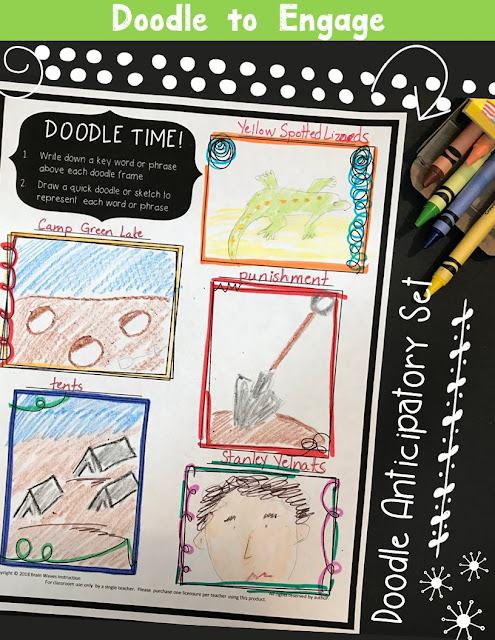
                DOODLE TO ENGAGE - One way to easily incorporate doodling into the classroom is with a doodle anticipatory set (don’t worry, I’ve provided it for you in the free PDF). I call it Doodle Time. 

                As you know, anticipatory sets are brief activities at the start of a lesson that instantly engage students. They can be used to activate students’ prior knowledge, provide continuity from the previous lesson, or expose students to the lesson’s objectives. For this doodle activity, you’ll provide 5 topics either from a previous lesson or as a preview to today’s lesson and then students will create doodles in the doodle frames for each topic. It’s easy, creative, and a perfect way to start a lesson!


                DOODLE TO LEARN - Check this out, a study found that doodling can improve people’s ability to remember information by nearly 30%! Yikes! If that’s the case, then it only makes sense to get students doodling WHILE they’re learning. I love to do this with Doodle and Do resources – I’ve created tons of Doodle and Do resources about everything from figurative language to nonfiction text structures

                Make teaching nonfiction text structures really fun with this engaging lesson. It includes doodle notes on each nonfiction text structure along with activities to practice learning about each nonfiction text structure!

                Each unit includes super fun sets of doodle notes and then targeted activities for students to show their learning. I hear from teachers around the world every day about how the Doodle and Do resources changed their classroom. So, let that be reminder that doodling while taking notes is a good thing! (Check them all out HERE!)


                DOODLE TO CELEBRATE - Another way to incorporate doodling into the classroom is to use doodles to celebrate special and important days.

                You can have students doodle to celebrate the first day of school. Just hand out blank index cards and kids can create doodle postcards about their summer or check out this doodle-style syllabus. It’s perfect for any class…and I’ve provided it FREE for you. 

                This doodle-style syllabus is a perfect way to help students learn about your classroom on the first day of school!

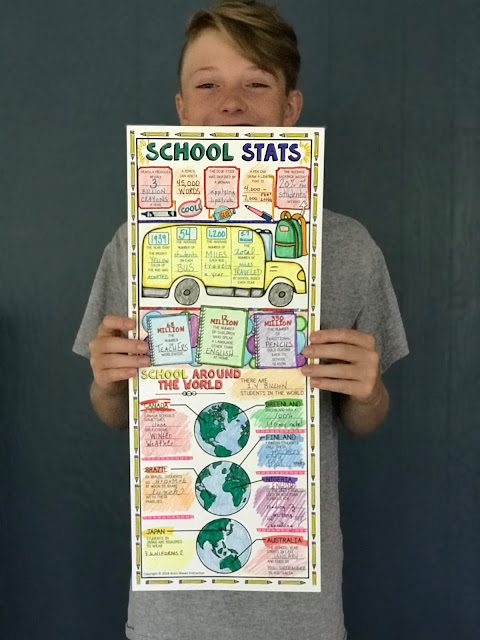
                And…speaking of the first day of school, here’s a sneak peek of a doodle infographic filled with school stats that I just created! Kids collect facts on a fact hunt and fill in their doodle infographic before creating an infographic of their own. 

                This fun back to school activity will have students up on their feet as they collect facts and then fill in a doodle infographic! So much fun!

                Oh, and speaking of infographics – I love to combine them with doodles and fact hunts in resources like these for Veterans Day, St. Patrick’s Day and Valentine’s Day.


                When you want students to reflect on their learning, why not try a little doodling? Have students doodle a comic of their learning at the end of any unit. Or, encourage students to create a set of doodle notes for the next year of students. You can even have students reflect on any unit of study with a Doodle Unit Review. Or, they can reflect on any book with this Doodle Book Review

                Looking for a creative way for students to review a book that they have read? They'll love this doodle book report! So fun and engaging!

                Doodling is not only engaging, it’s also a creative way for students to express and reflect on their learning.


                Have students reflect on the novel with this set of Wonder task cards, discussion questions, and doodle tasks!

                Also, doodles can be great springboards for conversation…have students discuss what they have sketched after you’ve given them a doodle task. Or have them make it part of a literature discussion with task cards like the “Draw” tasks in this end of the book activity for Wonder, Tuck Everlasting, Freak the Mighty or Walk Two Moons.


                Since doodling requires handwriting along with connecting images with concepts – helping students’ motor systems connect with the regions of the brain that deal with memory, it only makes sense to give students a chance to doodle every day. It’s easy to do with this set of Daily Vocabulary tasks. I’ve provided a set for you in the doodle sampler. (FYI - I've created a set of 160 words for grades 3-5 and grades 6-8.)


                They’re great for warm-ups especially since they trigger creativity the moment that students enter your classroom.

                OK, I know, I’m nuts about doodling, but there’s just something magical about how it takes the most mundane task (like learning how to write with textual evidence) and makes it SO much fun! I promise, the second that you bring doodles into your classroom, engagement will follow!

                Give doodles a try with the ideas and resources in this FREE DOODLE SAMPLER! 

                Enjoy!
                Mary Beth


                Doodle notes is a trademarked term used with permission. Please visit doodlenotes.org for more information.

                Picture Books for Teaching Theme, Figurative Language, Kindness, Creativity, and Writing!


                Ready for one of my favorite ways to teach students about writing, reading, creativity, and even kindness? It’s something that elementary teachers have known all along…it’s the picture book!

                The picture book is a powerful instructional tool that can work in any classroom…and I thought I’d share some examples of my favorites with you today.

                I’ve put the collection of books in a simple (and free) PDF with links that you can download by clicking this LINK. I’ve also paired each book with a ready-made unit that you can easily teach in your classroom too. Feel free to download the PDF at any time.

                In the meantime, let’s take a look at some of my favorite picture books for any classroom.

                First, I’m sharing a book that is great for the beginning of the year as you’re building a positive classroom community.

                Teach students about kindness and build classroom community with this picture book. It's perfect for back to school and middle school!

                Those Shoes by Maribeth Boelts taps into a child’s innate need to have what everyone else has. In this case, the main character longs for the “cool” shoes even though they are too expensive for his grandmother to purchase. After finding a pair that is much too small, the main character makes the ultimate sacrifice for a classmate. It’s a touching story that celebrates kindness and classmates…perfect for any time of year. (Click HERE to check out the book.)


                Picture books are also wonderful examples of creativity. Since learning to be creative has shown to be one of the most powerful skills for helping students thrive in life, it’s important to celebrate creativity in the classroom.

                These two books do just that…

                Use picture books to help students develop creativity. Read this creative book to inspire creativity in the classroom.

                Not a Box by Antoinette Portis is fairly simple at first glance. A box shape is turned into everything expect a box – a robot, a hot air balloon, even a rocket ship. It’s a fun example of “thinking outside of the box,” just imagine all the creative lessons you could do as an extension to this story. (Click HERE to check out the book.)


                This picture book is great to teach creativity. Middle school students will love how a traditional story is changed with imagination!

                The Three Pigs by David Wiesner is another example of creativity. This time students see how a traditional story can be flipped on its head and come to life with a little imagination. This book is the perfect springboard for lessons about thinking in new and creative ways. (Click HERE to check out the book.)


                Picture books are wonderful for adding a little humor and whimsy into the classroom. You can keep these two books on your shelf for a rainy day and pull them out when students can use a laugh. And…as a major bonus, humor produces psychological and physiological benefits that help students learn.

                Read this funny picture book to your middle school students to add laughter to the classroom!

                One of my favorite funny books is The Book With No Pictures by B.J. Novak. While there are no pictures in the book, there are plenty of silly words and crazy sentences that you, the reader, must read out loud. Students love how “powerless” you become against the words Novak makes you say. You’ll all be laughing together with this book! (Click HERE to check out the book.)


                Get students laughing with this funny picture book about a unicorn!


                Another funny book filled with voice (and a sweet message) is Unicorn Thinks He’s Pretty Great by Bob Shea. Not only is the book funny as the goat laments about the new Unicorn in town, it’s also cleverly written. There’s a lesson in this book along with a few laughs. (Click HERE to check out the book.)


                What about using picture books to teach critical ELA skills? That’s a genius idea.

                Teach the concept of theme in your middle school classroom with The Empty Pot.


                For instance, if you’d like to teach theme, try The EmptyPot by Demi. It’s one of my favorite stories because the reader learns its themes of honesty and integrity along with the main character that shows up to a gardening challenge with an empty pot. Not only is it a great way to teach theme, it’s a lovely way to showcase important character traits too. (Click HERE to check out the book.)


                Use picture books as mentor texts before starting a writing unit.


                The next time you’re putting together a writing unit, have students begin by reading mentor texts in the form of pictures books. It’s a super engaging and quick way for students to learn about the critical elements of the genre. I always started my memoir writing unit with a review of several picture books like The Baby Sister by Tomie dePaola. (Click HERE to check out the book.)


                Send students on a figurative language hunt with this picture book for middle schoolers!

                Want to each about figurative language? It’s easy with picture books. Send students on a figurative language hunt in a book like WhiteSnow Bright Snow by Alvin Tresselt. The story has a poetic quality as it tells about the first snowfall of the year. (Click HERE to check out the book.)


                Alright, I could go on for days…but I better stop right here. I just love how picture books are a powerful way to help students learn about critical ELA topics and build character. Remember, you can check out a list of all my favorites in this FREE download.

                Thanks so much for stopping by! I hope some picture books make an appearance in your classroom! 

                See you soon!

                Mary Beth 


                *This post contains affiliate links.

                Pop Up

                Related Posts Plugin for WordPress, Blogger...