Free Cards to Give Students at the End of the School Year - Easy End of Year Gift for Kids


As the school year comes to a close and festive celebrations fill the air, teachers everywhere are searching for the perfect end-of-the-year gesture to express gratitude and appreciation for their students. Amidst the flurry of final projects, report cards, and classroom packing, finding a unique and thoughtful gift idea can be a bit overwhelming. Look no further, dear educators! 

In this blog post, I'm sharing a FREE end of the year gift card that you can give to students. Get it sent to your inbox by adding your information below. Just add your email and then your first name.


    The "sweet" cards are designed to capture your students' hearts but also leave a lasting impression of an unforgettable school year. 

    These cards make great gifts for students at the end of the school year. The popsicle theme makes them fun and festive. They’re simple to make and sweet to share. Enjoy!


    To make the cards...

    ➧ Download the FREEBIE here.

    ➧ Choose the color or black and white versions of the popsicle shapes. 
    ➧ Make enough copies of the popsicle shapes for your students.


    ➧ Choose the message or messages that you will be adding to the back of the popsicle shapes.
    ➧ Make enough copies of the messages for your students.


    ➧ Cut out the popsicle shapes.
    ➧ If you printed the black and white version, you might want to color in the popsicles.


     ➧ Cut out the messages.

    ➧ Glue the messages to the back of the popsicle.


    You can personalize the cards by…

    ∎ Writing each student’s name on the stick.

    ∎ Adding a short note to the message card.

    ∎ Signing the message card.


     IDEAS

    ➧ Have students make these cards for each other. Simply print off the black and white popsicle shapes and give students a chance to color in the popsicles before cutting them out. Then, students can write their own messages to a classmate on the back.


    ➧ Glue the popsicle shape on a folded piece of scrapbook paper to make a card. Write a personalized note inside.

    ➧ Attach the paper popsicle shapes to real popsicle sticks. Just cut off the paper popsicle stick and attach a real stick with glue or tape.

    ➧ Host a popsicle party as you distribute the cards. 


    Add your information below to receive the free cards in your inbox.

      I hope your students love these "sweet" cards!

      Thanks for stopping by,
      Mary Beth

      P.S. I have a TON of end of the year ideas right here. Be sure to check them out!


      End of the School Year Checklist for Teachers

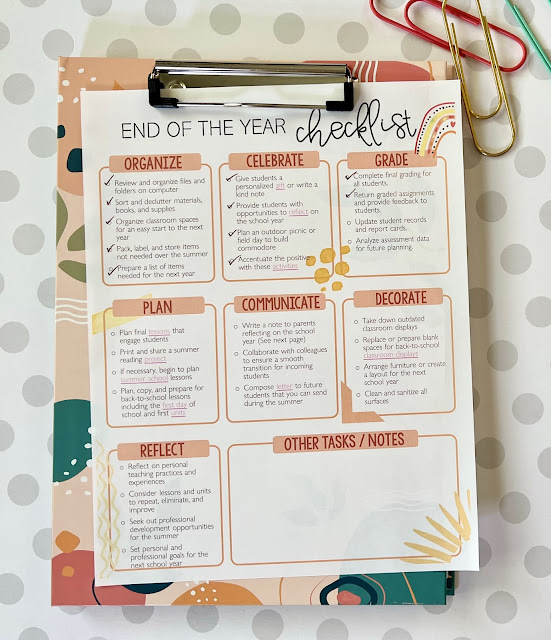
      Yahoo! If you're reading this then you made it to the end of a school year. That's no small feat! It's not easy guiding students through a year of learning with passion, kindness, and inspiration. You deserve a standing ovation and a little help making the end of the school year as easy as possible. So, I've compiled all the end of the school year tasks that you may want to complete in this post. 

      Don't worry, you can print a downloadable FREE version of the checklist right here. (BONUS! I've included a personal reflection and letter to parents inside the freebie, too).

      Since every classroom is different, some of these tasks may not apply to you and your students. Just skip those or tweak them as needed!

      ➤ Review and organize files and folders on computer

      ➤ Sort and declutter materials, books, and supplies

      ➤ Organize classroom spaces for an easy start to the next year

      ➤ Pack, label, and store items not needed over the summer

      ➤ Prepare a list of items needed for the next year


      ➤ Give students a personalized gift or write a kind note

      ➤ Provide students with opportunities to reflect on the school year

      ➤ Plan an outdoor picnic or field day to build commodore


      ➤ Complete final grading for all students.

      ➤ Return graded assignments and provide feedback to students.

      ➤ Update student records and report cards.

      ➤ Analyze assessment data for future planning.


      ➤ Plan final lessons that engage students

      ➤ Print and share a summer reading project

      ➤ If necessary, begin to plan summer school lessons

      ➤ Plan, copy, and prepare for back-to-school lessons including the first day of school and first units


      ➤ Write a note to parents reflecting on the school year (See free download)

      ➤ Collaborate with colleagues to ensure a smooth transition for incoming students

      ➤ Compose a  letter to future students that you can send during the summer


      ➤ Take down outdated classroom displays

      ➤ Replace or prepare blank spaces for back-to-school classroom displays

      ➤ Arrange furniture or create a layout for the next school year

      ➤ Clean and sanitize all surfaces


      ➤ Reflect on personal teaching practices and experiences (see free download)

      ➤ Consider lessons and units to repeat, eliminate, and improve

      ➤ Seek out professional development opportunities for the summer

      ➤ Set personal and professional goals for the next school year


      -----------------------------------------------------------------------

      I've saved the most important task for last...

      ➤ Rest, relax, and rejuvenate during your well-deserved summer break!


      Thanks for stopping by!
      Mary Beth


      Lesson Ideas for Writing a Lead - How to Teach Leads in Writing

      There's no doubt about it...a composition's lead is paramount! Would you read a book with a boring opening? Not me! A story's lead is its first impression, so it must be dynamite! 

      I've put together a FREE lesson for writing a lead that you can grab here. Be sure to download the freebie and then learn all about how I like to teach how to write a lead below.


      STEP 1: Build Background

      Give students background information on what a lead is.  Remind students that when writing and improving their lead sentences, they should consider their audience. 

      Teach students that...
      --- Leads are the beginning sentences of a story or writing piece.

      --- Since the lead is the reader's first impression of your story, it needs to be interesting, engaging, and intriguing.

      --- Effective leads begin in the most attention-getting, striking way possible.


      STEP 2 - Provide Examples

      A great way to help students appreciate the power of an effective lead is to provide them with examples. My favorite way to to this is to share 3 examples and have students rank the samples. Students should give the best lead a #1 ranking and the worst a #3 ranking. 

      Share examples like these with students...
      --- We toured a cave during our family vacation. 

      --- "Watch out!" I screamed as something dark and scary swooped down toward my sister's head.

      --- The damp cave sent a shiver down my spine.

      Then, have students explain their scores with their peers or the class. Encourage students to give one or two reasons for each ranking. As they investigate the examples, they'll begin to understand the components of an effective lead.


      STEP 3: GIVE GUIDED PRACTICE

      There are many different ways to write an engaging lead. As students learn about writing leads, it's important for them to realize that they must try to appeal to their audience. Share a least 3 different types of leads to do just that.

      You might give students guided notes and practice with these types of leads...
      --- Middle of the Action - This lead begins with the most exciting moment in the story. For instance, "The sirens of the fire truck came screaming down my street as flames seemed to light the sky on fire."

      --- Sensory Details - This lead grabs the reader's attention by creating a picture in the reader's mind with the five senses. For example, "The thick smoke of the warehouse fire blackened the sky and smelled of burning tires."

      --- Begin with Dialogue - Another way to begin a story is to start with someone speaking to draw readers into a piece of writing. This could go something like, "Come closer. Stay beside me," my mother urged each of us as the fire trucks whizzed by.

      Providing students with clear ways to begin a story helps many of them effectively improve their own leads.


      STEP 4: PRACTICE

      Once students have a strong understanding of leads, give them a chance to write several leads. You can do this with a "Lead Makeover" activity. Provide students with three lame leads that they must improve. Challenge them to improve the leads with a style that they learned about in Step 3. 

      Have students improve the following leads...
      --- My birthday party was a lot of fun. (Have students write a new lead that begins in the middle of the action.)

      --- Our teacher handed out a pop quiz. (Challenge students to add sensory details to the new lead.)

      --- It was the first day of school. (Have students improve this lead with dialogue.)

      Once students write new leads, have them share their writing with a partner and small group. Then, have students share out the best leads with the class.


      STEP 5: WRITE

      At this point, your students will be confident lead writers. Have them put their learning to the test by encouraging them to improve a lead in their current rough draft. If students do not have a rough draft that they are working through, you could give them a writing prompt to help them practice writing an engaging lead.

      Have students write a lead for...

      --- A time when they won or lost something.
      --- A time when they felt scared or nervous.

      Challenge students to write a lead in all 3 styles they learned about: middle of the action, sensory details, and dialogue. Then, give students a chance to share their writing with the class.


      ----------------------------------

      I hope this lesson helps to strengthen your students writing. You can find this lesson along with 9 other writing lessons like voice, word choice, and figures of speech in this popular resource. 

      Be sure to download the sample lead lesson here.

      Thanks so much for stopping by!
      Mary Beth

      P.S. Have you seen this post about how to build better writers?


      How to Teach Theme - Tips for Teaching Theme in Language Arts


      Theme is such an important concept when teaching reading. Students are asked to determine the theme of a text over and over again. However, many students struggle with how to identify the theme. That's why I'm sharing some of my favorite ways to teach theme. You'll find theme lesson ideas, theme activities, and theme passage suggestions to help your students finally figure out how to find theme! 


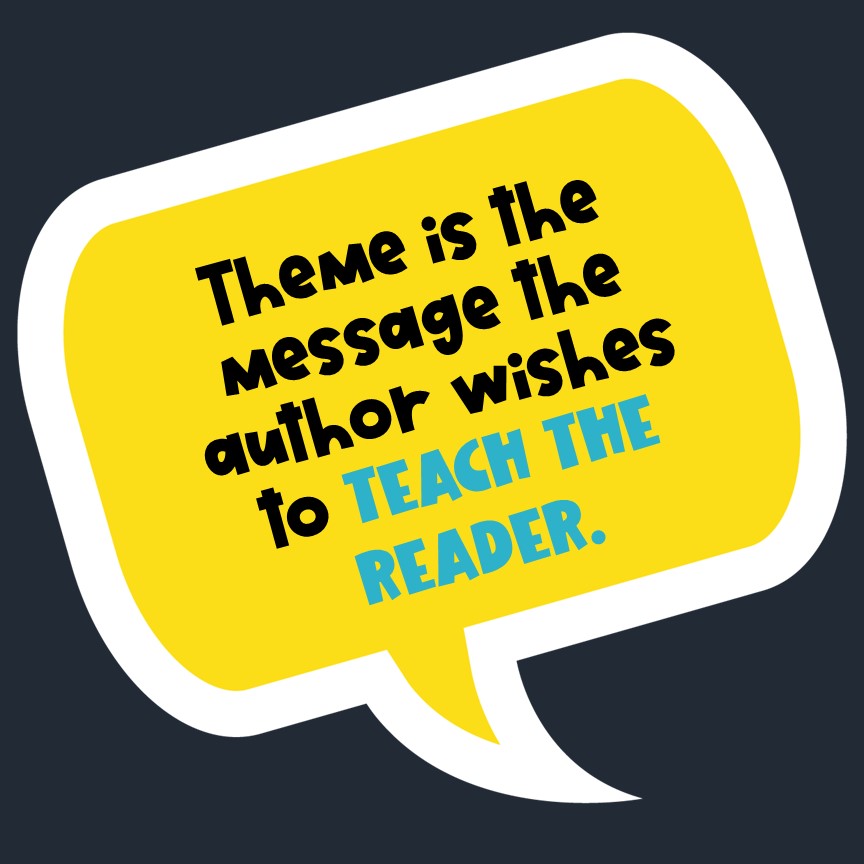
      Sometimes when thinking about theme it is easiest to think about what it is not. Theme is NOT the subject of the text. The subject would be a single word like "childhood" or "friendship." It is NOT a summary. A summary would be several sentences describing the text. Instead, it is the underlying idea of a text. It is what the writer wishes to convey about the subject. Therefore, it is usually written in a phrase or clause.


      When teaching theme, I find that it's best to introduce the critical components of theme through notes and a class discussion. My favorite kind of notes are theme doodle notes, of course. Since doodles are more engaging, they're a great way to get students focused as you begin teaching about theme. Once students have a general understanding of theme, you might want to have a discussion with students.

      During the discussion ask students to think of texts that have a theme like "Be careful what you wish for" or "Never give up on your dreams." Then, have students discuss the theme of fairytales or fables like "Beauty and Beast" and "Goldilocks and the Three Bears." The notes and discussion will drive home the idea that the theme is not a single word subject, nor is it a multi-sentence summary. Students will realize that the theme is a truth about life revealed in a phrase or clause. 


      A work's theme can apply to multiple texts. When you teach about theme you'll want to help students realize that themes need to be general enough to apply to many different texts. Take the theme "Be careful what you wish for." That theme can apply to "The Little Mermaid," "Jack and the Beanstalk," and even "Macbeth." It's important for students to realize that themes are universal. 


      You'll also want to expose students to different genres of writing so that students understand that themes are evident in all writing including fiction, nonfiction, prose, and poetry. I've compiled different genres in this theme unit.

      Since poems are short and compressed, I love using poems to help students develop an understanding of theme. Take a poem like, "Life Doesn't Frighten Me" by Maya Angelou. In Angelou's poem, the speaker is a child. Angelou's message and the poem's theme is to "be brave when faced with your fears." You might share poems like this or some of my other favorites to help students read several texts and practice determining universal themes.


      The theme is the message that the writer wishes to reveal about its subject. It's what the reader is supposed to learn about life after reading the text. Therefore, it is usually not directly stated in the work. Instead, students will need to think about the plot, conflict, characters, and setting and then make an inference or educated guess. When students consider all the elements of the text, they'll need to infer the theme.


      One way to help students understand that the story is built around the theme is to have them develop their own stories with a theme in mind. At first, you can have students do this by providing them with themes that they will need to portray in a comic strip or skit. For instance, you might have students doodle a comic for the theme "Two heads are better than one." Or, you could have students work in small groups to come up with a skit that has the theme "Friends always show up when you need them." By writing their own texts, students will begin to see how the theme is infused throughout the work.


      As students determine the theme of a passage, they'll need to consider a text's plot, characters, conflict, and tone. In other words, they need to think about the entire writing piece and reflect on its message about life. That can be challenging for students. 


      That's why I like to give students many opportunities to practice finding the theme. Task cards and mini-passages work especially great for this. I've taken the idea of theme task cards even further with Learning Take Out activities. Students read fiction and nonfiction passages that they grab from take out containers. The passages are the perfect way for students to develop the ability to identify a text's theme.

      -------------------------------------------------

      As you can tell, there are many ways to teach theme. I think the more chances we can give students to develop their reading skills, the better! If you're looking for some ready-to-teach resources, grab these THEME resources:

      ⭐--- FINDING THE THEME MINI-UNIT - Doodle Notes and Activities

      ⭐--- THEME UNIT - 3-Day Theme Unit

      ⭐--- LEARNING TAKE OUT - Theme Task Cards


      Thanks for stopping by!

      Mary Beth


      P.S. Here's my latest resource for teaching theme!

      Pop Up

      Related Posts Plugin for WordPress, Blogger...