Attack Of The Adolescent Brain! What Every Middle School Teacher Needs To Know


Teaching adolescents can be hard. Being an adolescent is harder. During some of my most difficult days in the middle school classroom, I always found comfort when I remembered how I felt when I was a middle schooler. Those tween days of awkwardness and change were some of my worst. Something else that helped me as a teacher? Science! I found that understanding the adolescent brain was super helpful. That's why I thought I'd share a few facts about the adolescent brain that might make it easier for you to teach middle schoolers.


Adolescents sometimes get a bad reputation for being unmotivated and even lazy. As teachers, we know what a big impact kids’ academic performance can have on their future. We can be tempted to think that they’d see that too. Don’t our middle-school students know that they’re only hurting themselves if they slack off? The answer in many cases: Nope. 

Some adolescents are naturally motivated – real self-starters. However, for most, things are a little more complicated. Speed of brain development and common performance anxiety are two things that can seriously affect a young student’s level of motivation.

The frontal cortex is the area of the brain that controls reasoning, attention span, perseverance, and motivation. This structure is not fully developed in adolescents. In fact, it keeps changing and maturing well into adulthood.

A kid whose frontal cortex develops early is more likely to be a focused and conscientious student. Those who develop more slowly can tend to be inattentive, disorganized, and give all the appearances of being just plain lazy.


Anxiety plays a role in students' performance as well. Let's face it, anxiety about schoolwork is another motivation-killer. When a kid is worried about his/her ability to complete an assignment, they often react by avoiding it. They may do this without even consciously realizing it and as a result, may not be able to explain their behavior. Anxiety of this type can grow to the point where it actually physically limits access to the frontal cortex. And that means – you guessed it – zero motivation!


First off, let's keep in mind that the typical adolescent student is not behaving this way on purpose. Many of them are simply not yet mentally up to the challenge of getting organized and motivated. That's where we come in! As teachers, we can help adolescents become more successful.

One good way to get unmotivated middle school students moving is to provide the structure that they aren’t yet able to create for themselves. Show them what good study habits look like, provide examples, and let them know that you expect them to follow these examples on their own. I found that making it a point to teach students HOW to do things like organize their binders and HOW to actually study were so important. Sometimes it's essential to slow down and spend time teaching students critical skills. Units like this "How to Study" Doodle and Do resource that combines doodle notes and learning stations can do wonders for students. 


Another idea is to be consistent, firm, and relentlessly positive. Having structure in place can help to reduce your students’ stress and anxiety over schoolwork. Our attitude and interactions with them are equally important. This is where it pays off to spend time encouraging students.

I love surprising students with positive notes or cards to show them that they matter and that I care. The notes can be quick to write, you could even write them on the top of students' papers, but their impact is great! If you'd like to give it a try, I've put together a FREE set of positive notes that you can pass to students right HERE.


Does it ever feel like you're on an emotional roller coaster with your adolescent students? Fear! Anger! Tears! Joy! What’s up (and down) with that? Overly-emotional reactions are common in adolescents, who are undergoing rapid physical, psychological and social development


Puberty is the beginning of major changes in the limbic system, which is the part of the brain that forms emotions.The amygdalae, two almond-shaped clusters in the brain, are used by the limbic system to connect sensory information to emotional responses. As the amygdalae enter a new stage of development, adolescents are prone to intense anger, fear, sadness, and excitement.

The limbic system is under the control of the frontal cortex, which is tasked with moderating impulses. However, as we’ve already seen, the frontal cortex does not always keep pace with other developments in an adolescent’s body. So, where does this leave us teachers? All alone, facing a classroom full of raging, unrestrained amygdalae. No wonder being a middle school teacher can be so challenging!


Don’t give up hope! As additional areas of the brain start to help process emotion, older adolescents gain some equilibrium and have an easier time controlling their emotions. But until then, they will often misread the intentions of teachers, reacting with anger or tears to even the gentlest attempt to redirection.

Again, our best bet as educators is to set clear, demonstrable expectations for your middle school students’ behavior. Once these are established, be firm, consistent, supportive, and - let’s say it again - relentlessly positive. You can easily spread a little kindness with motivational posters and quote cards.


You might want to all combine reinforcement with intentional classroom exceptions. I've put together my favorite tips in this short video. 
Giving students a little guidance along the way as they grow into their amygdalae isn't a bad idea either. You might carve out times to teach about classroom community and positive emotions to guide them during their development. This could be as easy as creating a random acts of kindness chain to display around the classroom.


Here's the thing...middle school students are challenged to engage in rigorous educational activities at a time when their brains are going through immense changes. It's just plain hard to be an adolescent sometimes. Of course, it is their personal responsibility to manage their own behavior and study habits. However, by understanding the underlying physiological causes of their sometimes frustrating behavior, we can be ready to offer students the support and guidance necessary for success!

Thanks for stopping by!
Mary Beth


The Benefits of Teaching Creative Writing - Adding Creative Writing Tasks to ELA Instruction


This is an era of standard-based teaching, with lots of curriculum to cover in very little time. Teachers are pressured to make tough decisions that will have a serious impact on their students' education. We can't do it all, so what subject matter shall we prioritize? What's most important? If it's not likely to be on "the test", can we afford to spend time on it?  

Something has to give, and creative writing is all too often the first candidate for the chopping block. It's a subject that doesn't fit well into a standardized test. It's tricky to grade. Its value is difficult to justify by means of the standard research data. 

Add fun creative writing lessons to your middle school classroom!


In fact, the value of creative writing has also been called into question by some Common Core designers. These leaders see the emphasis on "self-expression and emotion" that's associated with creative writing as being somehow detrimental to "lucid communication." These developments are unfortunate for a number of reasons. Creative writing does, indeed, allow for self-expression and emotional release - benefits that shouldn't be disregarded. Much has been written about the psychological and emotional benefits of creative writing.

Let's take a look at some of these practical values of creative writing, and consider some arguments for keeping it in our classrooms!  

Easily infuse creative writing into your classroom with these fun creative writing lesson plans for the middle school!


It has been shown in studies that children who have the opportunity to study creative writing improve their performance in other subjects. Math, science, and language studies skills have all been shown to benefit from practice in creative writing. 

Writing encourages broad, creative thinking and helps build a problem-solving mindset that is open to multiple alternatives. In other words, kids who write regularly tend to become innovative analytical thinkers. This skill translates well to study of any subject, and will also benefit the student in their later career.


Speaking of writing regularly, it's easy to add some quick creative writing lessons into any class period with this set of 5 FREE Creative Writing Lessons. 


Make creative writing fun and engaging with these quick and easy creative writing lesson plans.

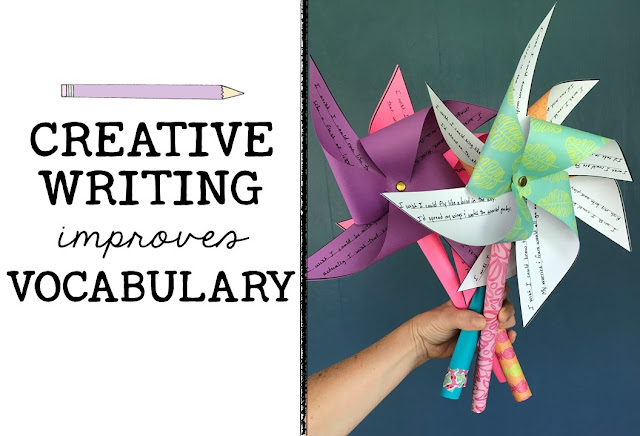
The language of literature is different from what's used in day-to-day writing and conversation. Creative writers get a chance to experiment with new words and unfamiliar turns-of-phrase. Students can take time to find the word that conveys their thought with the greatest clarity, precision and style. 

This is an excellent mental exercise. It's also fun! Students who build their vocabulary through creative writing go on to become adults who communicate clearly and vibrantly. This is a skill that's valued in the workplace, and earns the respect of colleagues. 

Get students building their vocabulary with this set of 101 This or That Writing Prompts. Students get to choose the writing prompt that appeals to them as they develop their skills as a writer!


Get students writing with fun and engaging creative writing lessons.

The creative writing class experience involves group review of a student's work. Creative writing students learn to accept constructive criticism, and to use it to improve their work. Students are also given the opportunity to analyze the work of others, to weigh its merits, and to offer thoughtful, respectful guidance. This ability to work cooperatively in a group setting will prove to be invaluable in adult life.

Students can practice the skill of peer editing and review as they review creative myths, fables, or even persuasive advertisements. Giving students a chance to work together and build a community of writers is a wonderful and essential part of creative writing.


Free creative writing lessons plans for middle schoolers!

Creative writing gives students the chance to assert themselves and their opinions, and to develop their “voice.” This, along with the opportunity to see their own words on paper, helps to build self-confidence. Students who regularly put their thoughts out for their fellows to read, and even criticize, are less intimidated by other challenges. A student who has gained confidence and found his or her own unique voice through creative writing is better equipped to succeed in the adult world.

I saw some of the greatest growth in my students during my favorite poetry writing unit. Giving students a chance to write creatively as they experiment with different styles of poetry builds such confidence! 


Infuse creative writing into your classroom!


In a standards-based and data-driven educational environment, it's not always easy to justify the need for creative writing. It's also not necessarily an easy topic to teach. However, for all of the reasons above, I feel that it's well worth the effort to include creative writing in our regular curriculum. In addition to the well-documented emotional benefits and "soft skills" it encourages, creative writing also develops a range of practical skills that are valuable in adult life.

Here are a few FREE creative writing activities that you can download right away:

➤ Limerick Writing Lesson
➤ Spooky Story Writing
➤ Spring Poetry Writing Lesson
➤ Pinwheel Poem Writing Lesson
➤ Winter Myth Writing


I hope you've found some great reasons to teach creative writing!

Thanks for stopping by!
Mary Beth


Favorite Literature for Middle School Students


I don't know about you, but I love teaching literature that not only challenges students to become better readers, but also to become better people. There's nothing quite like a beautiful piece of literature that nurtures students' minds and souls. That's why this round-up of my very favorite pieces of literature to teach in the middle school classroom includes literature that teaches lessons about kindness, community, gratitude and hope. I'm sure some of your own favorites have made the list, but I hope you'll discover something new to share with your students!

Lesson plans for Thank You M'am by Langston Hughes.

My favorite short story to teach is "Thank You, M'am" by Langston Hughes. As you may know, "Thank You, M'am" is the story of a boy who tries to steal a woman's purse. What the woman does next surprises the boy and sheds light on the idea that it "takes a village to raise a child." Students learn about the power of community and gratitude in this sweet story. 

When teaching this unit, you might have students build an interactive file folder as they read. Be sure to include information about the Harlem Renaissance to help students learn about Hughes. Then, have students fill their folders with information about the story's setting, characters, plot, and theme. You might want to have students complete a reflection after reading the story. Give students a chance to "walk" in the main character's shoes. I promise, their responses will be touching and powerful. Check out all of my lessons for this unit here.


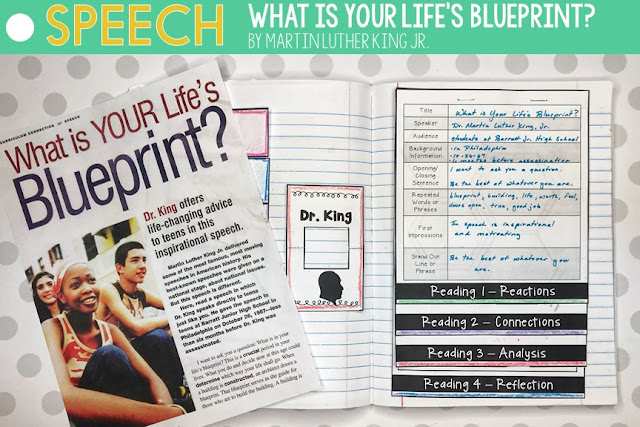
Speech analysis lesson for "What is Your Life's Blueprint?" by Martin Luther King Jr.

I can't express enough how much I love this speech! It's "What is Your Life's Blueprint?" by Martin Luther King Jr.. King gave this speech to a group of middle school students. In the speech he outlines three steps for students to follow to have a meaningful life. He includes statements like, "Don't allow anybody to make you feel that you are nobody. Always feel that you count. Always feel that you have worth." His words are so inspirational and empowering!  

This speech is wonderful to teach in honor of MLK Day, but truly, it's perfect any time of the year. You might want to include background information on King before beginning a close reading of the speech. Through multiple readings of the speech, students will not only develop their reading skills, but they'll also be able to thoroughly process King's message. You might even have students write about their own life's blueprint when they finish analyzing the speech. Find all of my lessons for this speech here.


Doodle notes, task cards, and lesson plans for Wonder by R.J. Palacio

You knew that this book would make the list, right? Palacio's story of about a boy named Auggie born with genetic abnormalities is both tender and heart wrenching at times. As Auggie tries to fit in at a new school, he ultimately discovers that it is often more important to stand out. Wonder introduces characters that transform and grow right along with the reader. The book's ultimate message is one of kindness, and that's why it's one of my very favorites!

I think this book works great with literature circles or as a read aloud. When students finish the book (whether after reading or listening), I love the idea of giving students task cards with targeted questions about the novel. If your students are up for it, you could always throw in some doodle pages. My collection of task cards and doodle pages can be found here.


In Virginia Hamilton's version of the folktale, "The People Could Fly," students will discover perseverance and hope. This folktale tells the story of slaves who rebel against their cruel owners and fly away. When the characters in the story discover they can fly away from the violence of their world, there is a sense of hope and inspiration. This folktale highlights the power of the human spirit in a moving way.

If you teach this folktale, you might include background information on Virginia Hamilton, slavery, and the folktale genre. Then, give students a chance to investigate the folktale's setting, characters, plot, and theme. You might want to have students reflect on what the folktale made them think about and how the folktale made them feel. All of my favorite lessons for this folktale are here.


A Christmas Carol lesson plans and activities for the classroom

This classic tale just had to make the list! In my classroom, we always read the play version of "A Christmas Carol." The story of Ebenezer Scrooge's transformation from a grouchy miser to a generous gentleman never gets old. I love how this play teaches about forgiveness, community, reflection, and kindness. 

Teaching "A Christmas Carol" as a play is a great way to get lots of students reading in class. Just assign new parts for each scene and you'll be able to involve all of your students. I even have a student read the stage directions. After finishing the play, you might have students write a letter to Marley as if they are Ebenezer Scrooge. Have them recount the events of the night and then share what he's learned. Students love the chance to take on Scrooge's persona. You can find this activity and more right here.


Poetry Lesson Maya Angelou "Life Doesn't Frighten Me"

I'm a big fan of Maya Angelou, so it's no surprise that her poem, "Life Doesn't Frighten Me," made the list. The poem encourages students to recognize the courage that is inside of them. Angelou celebrates conquering one's fears and taking on the world. What's more exciting than that? 

This is a great poem to teach because its structure and vocabulary are truly accessible for students. It also lends itself to fun writing prompts about fears and courage. You might have students write a new stanza to add to the poem, complete an analysis flip book, or even have students doodle in response to their learning. The options are endless with this inspiring poem. You can find my favorite Doodle and Do lessons for this poem here.


-------------------------------------

I hope you found a few new pieces of literature to share with your students. As a review, here are my favorites:

--- Story - "Thank You, M'am" by Langston Hughes
--- Speech - "What is Your Life's Blueprint?" by Martin Luther King Jr.
--- Book - Wonder by R.J. Palacio
--- Play - "A Christmas Carol" by Charles Dickens and dramatized by Frederick Gaines
--- Folktale - "The People Could Fly" by Virginia Hamilton
--- Poem - "Life Doesn't Frighten Me" by Maya Angelou


Thanks so much for stopping by!

Mary Beth


Positive Notes for Students


Let's face it, there are times when we all could use a little encouragement...and our students are no different. Sometimes, a little note does just the trick! That's why I put together a collection of note cards that you can share with students on any day of the year! I've even got ideas for how to use them in the classroom.


First, things first, if you'd like a free set of the note cards, just add your information below. Then, check your email and download the cards instantly. (I'll provide another link for signing up at the end of this post in case you want to keep reading.)


Sign Up & Download the Positive Note Cards!

Add your name and email address to receive the Positive Notes in your email inbox!
    Join thousands of teachers and receive exclusive freebies (like the positive notes cards) in your email inbox! Spam-free. Unsubscribe at any time.

    The collection of positive notes includes two versions. One set has a "nature" theme. This version is black and white so you can just print and go!

    The other set has a "sweets" theme. It's full of color and whimsy!

    Both sets include 18 different cards with words of encouragement. There are even 3 blank cards that you can hand-write messages on. They're designed to be super versatile! Here are a few ways that you can use them in your classroom:


    DESK CARDS

    Just cut out the positive notes and fold them along the dotted line. This way they can stand up all on their own. Then, place them on students' desks when they could use a little encouragement. These are especially fun to display before a big exam or as a celebration for awesome behavior!

    WORK CARDS

    You can also cut apart the cards and staple them along the tops of students' papers. It would be super fun for students to save them and try to collect them all during the school year!

    NOTE CARDS

    Since the cards can fold in half, they also work perfectly as note cards. Just cut them out, fold them, and then write a personalized note inside for each of your students. 

    GIFTS

    The positive note cards make awesome gifts, too! First, fill a clear plastic bag with some treats. Then, add a positive note inside the bag and tie it up with a ribbon. Just like that, you'll have a super sweet gift for students! Just imagine handing these out during the holidays or at the end of the school year! Your students will love them!

    If you'd like to use these positive notes in your classroom, I'll happily email them to you. Just add your information below and check your inbox!

    Sign Up & Download the Positive Note Cards!

    Add your name and email address to receive the Positive Notes in your email inbox!

      Join thousands of teachers and receive exclusive freebies (like the positive notes cards) in your email inbox! Spam-free. Unsubscribe at any time.


      Thanks so much for stopping by,
      Mary Beth

      P.S. Have you seen this set of FREE posters that spread a positive message?


      Laughing and Learning: The Science Behind Classroom Fun and Easy Ways to Get Kids Giggling


      Ever wondered if laughter is not just good for the soul but also for learning? Well, hold on to your lesson plans because the American Psychological Association says it is! Turns out, laughter isn't just a mood booster; it's a fantastic tool for making knowledge stick. According to Zak Stambor, laughter is like the secret sauce that boosts student participation and cranks up their attention levels.

      Now, we all know the magic that happens when kids in a classroom burst into laughter – it's contagious! So, let's dive into some super easy ways to turn those giggles into golden moments of learning. Trust me, your classroom is about to become the coolest place to be!


      FUNNY VOICESLet's face it, silly voices are so much fun! Here are some super easy ways to get students laughing with silly voices:

      --- Have students read out loud with a partner or a small group in a silly voice. I love to have students pick different voice challenges out of a basket or bag. After they pick a voice challenge, they have to read to their partner in that voice. I promise, even your most reluctant reader will get reading and laughing!


      Great news! You can find a set of 24 silly reading tasks in the Laughter and Learning Exclusive Freebie. 

      Just add your info. below and check your email inbox!


        --- Read a passage from a text as a class, in unison, in a silly voice. This is especially effective during the second reading of a passage. Read the passage in "normal" voices first, then have everyone read as if they're underwater or whispering or even like a pirate. 

        --- If you read books out loud to students, you might want to experiment with some funny voices for characters. You'll get students cracking up and following along!


        FUNNY STORIES - Sharing, writing, and reading funny stories is a wonderful way to bring laughter into the classroom. Here are a few ideas:

        --- Have students write their own funny stories. You can do so with an entire writing unit like this Descriptive Writing Unit where students make up funny stories (along with research) about a wild pet. Or, you can get students laughing with Creative Writing Lessons. One of my favorites is the Write and Pass Story. This activity is super easy and very funny! All you have to do is assemble small groups of students. Give them each a piece of paper. Have them each begin a story. 


        Then, after a couple of minutes, have them fold their paper to hide the majority of what they've written. Next, they need to pass it along to someone in their group who will pick up the story where their classmate left off. 


        This process of writing and passing continues until the story ends. Then, students get a chance to read the jumbled stories. They'll be laughing for sure!

        You can find all the materials you'll need for Write and Pass Stories in this FREE Laughter and Learning Resource. Just sign up below and check your email inbox!


          --- Tell students funny stories about your own life. Bonus points if you can connect the stories to their learning!

          --- Read funny pieces of literature! There are some funny short stories in Guys Write for Guys Read, and kids love the humor in the classic story, The Ransom of Red Chief by O. Henry. Oh, and if you'd like to get kids cracking up during a read aloud, try Crash by Jerry Spinelli. Poetry can be funny, too! Some of my favorite funny poems are in this blog post.


          FUNNY TASKS - Sometimes the easiest way to get students laughing is to add a funny twist to an otherwise ordinary task. Here are my favorite ways to make traditional tasks a little funnier!

          --- Homework Twists - Let's face it, homework could use a little humor. An easy way to get students cracking up while doing their homework is with homework twists. I love to staple Homework Twist Task Cards to the top of students' paper. 


          Or, you could roll a paper homework cube that challenges students to complete their work in usual and funny ways. Don't worry, I've included the Homework Cube in the Laughter and Learning Freebie!


            --- Test Questions - The next time you're writing a test, why not include some funny phrases or situations? You might fill a comma quiz with sentences all about a befuddled zookeeper or write passages for reading comprehension about the misadventures of a mad scientist. The idea is to sprinkle some humor into an otherwise humorless task!

            --- New Positions - Often, you can get students laughing by challenging them to do their work in strange and unusual positions. Instead of doing their daily warm-ups on top of their desks, why not have them complete them on top of their heads or behind their backs? You'll get students giggling as they try to complete the task and laughing out loud when they see what their work looks like! 


            My students loved these challenges so much that I made a paper cube that we could roll to determine silly ways for students to do their work! If you'd like, I'll send you a free copy, just add your info. below.


              FUNNY GAMES - Games are a great way to get students cracking up while they are actively involved in their learning. Here are a few of my favorites:

              --- Carpool - This game is inspired by the popular Improvisational Theatre Game, "Hitchiker." I altered it slightly to use in the classroom. It's a great game to practice inferencing skills, vocabulary, and character analysis. Students LOVE this game! 

              Here's how it works. Bring four chairs to the front of the classroom. Set them up like a car with two seats in front of the other two seats. Point out the driver's seat and passenger seats to students. Explain that the game will start with 3 students in the "car." They'll need to have a conversation for about 20 seconds until they pick up another student who is carpooling with them. Before this student gets in the car, you will need to give him/her a personality trait or vocabulary word. For instance, if you are studying "A Christmas Carol," you might give him the words miser, generosity, solitude, or specter. He will be responsible for acting in a way that the other passengers can guess the word or trait he is acting out. So, if he was given the word "generosity," he might offer the passengers his shoes or volunteer to drive or suggest going to a drive-thru so he can buy them lunch. The idea is that the new passenger will continue acting until the others catch on. Then, the other passengers should start behaving in the same way. Once everyone is acting incredibly generously, the game ends. Bring new students into the car and invite another student with a new trait to be the carpool-er. 

              This game is a super funny way to help students master character traits and/or vocabulary! After you play it once, and get the entire class laughing out loud, be prepared to play it many more times! It's a hit!


              --- Listen Up - This quick game combines listening skills and jokes to get students giggling. I've included it in a popular Listening Comprehension Unit. To prepare, find a joke or two that you think students might like. Then, "hide" the punchlines in a very different sentence. For instance:

              Joke: When do astronauts eat?
              Punchline: At launch time!
              Hidden Punchline: Ratlaugh on chairs with tiny mice.

              Create a set of instructions to help students eliminate the other letters in the hidden punchline phrase. For instance, "Cross out the first and last letters in the word 'rats.'" Then, to play the game, tell the joke to students. Have students write the hidden answer phrase on their papers. Explain that they will have to listen to and follow the directions that you read out loud to discover the punchline. Give students the directions one at a time until they reveal the punchline. This game is a funny way to practice listening skills!


              To save you time, I've put together a set of "Listen Up" activities in this exclusive FREEBIE. 


                I hope you've found a few ideas to make your classroom a little funnier! 


                Thanks so much for stopping by,

                Mary Beth


                * This post contains affiliate links.


                Pop Up

                Related Posts Plugin for WordPress, Blogger...