Positive Affirmations for Teachers - Promoting a Positive Mindset


Let's face it...being an educator is challenging. Teachers often have the weight of the world on their shoulders. So, simple coping strategies are essential for promoting a positive mindset about teaching. One way to reduce stress, promote happiness, and reset one's thoughts is with positive affirmations. Reciting positive affirmations is an easy tool for teachers.

Affirmations are positive statements that help you overcome stressful and negative thoughts. They are brief phrases, repeated frequently. When affirmations are repeated often, one’s outlook and thinking patterns begin to change. Positive mental repetitions reprogram our thinking patterns, so that we begin to think and feel differently.


Affirmations have been shown to boost problem-solving abilities and reduce health-deteriorating stress. In addition, they can stimulate the parts of our brains that make us more likely to make positive changes. Affirmations are a simple way to lower stress and promote positivity.


The idea is to pick a phrase and repeat it to yourself. When you repeat the phrase three to five times a day, the positive belief is reinforced.

Here some to try...
--- I can do hard things.
--- My job is important and meaningful.
--- I adore my students.
--- I am building a kind and productive classroom.


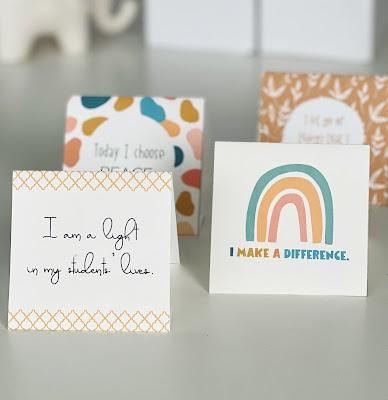
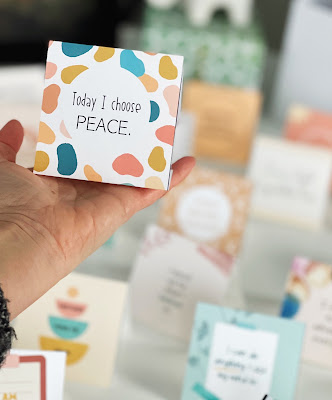
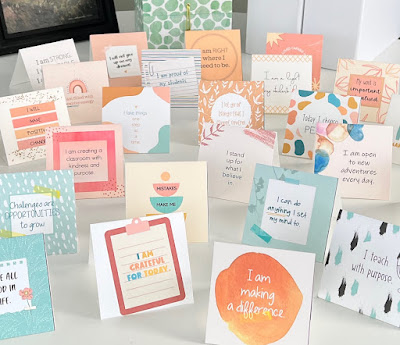
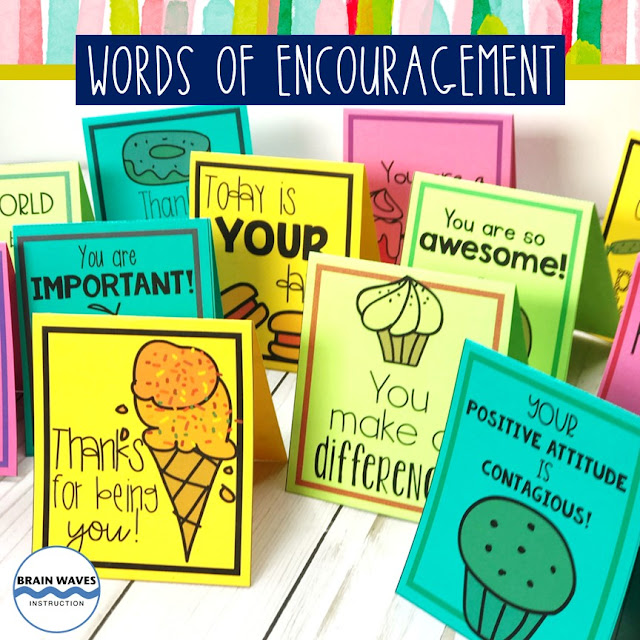
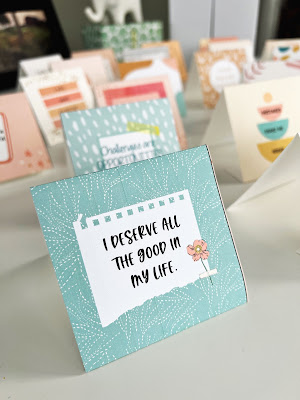
I like the idea of keeping positive affirmation cards right on my teacher desk. When I see the affirmation phrase, it's easier to remember to recite it. It's a simple way to reset my thinking throughout the day. Since I'm a fan of posting the affirmations right in front of me, I made a FREE set of 30 affirmation cards for you.  They're designed to stand up all on their own.


Click the link below and they'll arrive in your inbox. I've even included a few blank cards that you can customize.


The positive affirmation cards are designed to be versatile. You might… 
--- Place them on your desk to reference throughout the day. 
--- Gift them to your colleagues. 
--- Add them to your lesson plan book as a daily reminder. 
--- Choose your favorites and make larger posters. 
--- Select a new affirmation at the beginning of each school day or week. 
--- Write your own affirmations on the blank cards that are provided.

I hope you've found some affirmations that bring some positivity to your days in the classroom. I so appreciate you!

Thanks for stopping by!
Mary Beth

Positive Classroom Community Activities and Ideas


Building a classroom community where students feel included, valued, and supported is every teacher's dream. As educators, we want our students to feel like important members of our classroom community. Of course, this happens naturally in the way we interact with students and the way we celebrate learning in our classrooms. However, I've found that it is also effective to include intentional activities that help students build bonds, develop social emotional learning skills, and foster a positive learning culture. 

Here are a few of my favorite ways to build a positive classroom environment...


Writing notes to students is a wonderful way to let them know how important they are. Many students have a deep desire to be noticed and recognized. Taking a moment to share a kind note with kids is a perfect (and easy) way to let them know that they matter.

The notes you write don't need to be extravagant. Sometimes a little message next to students' homework assignments or a post-it note at their desks is perfect. You might also want to be more intentional and designate a day in your planning to write notes to students. I've found that it's best to keep a set of notecards at the ready for sharing with students. 

To make sharing words of encouragement really easy, just grab this FREE set of positive note cards.


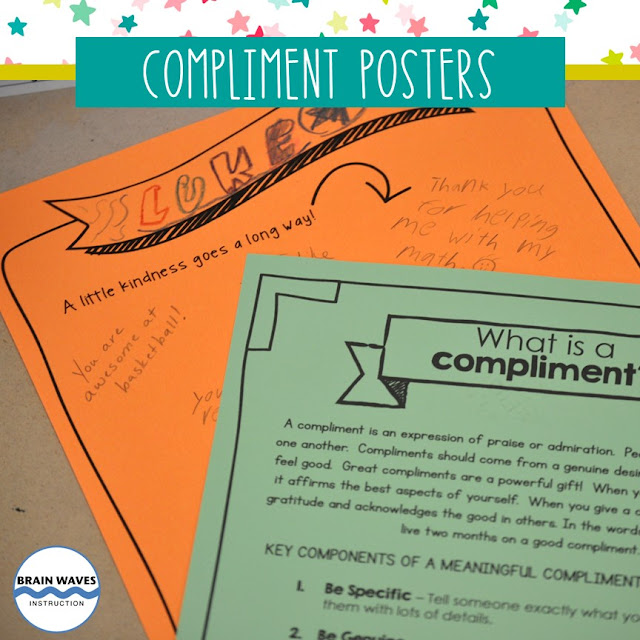
Build a positive classroom community by giving students a chance to be kind to each other. One of my favorite ways to do this is to play "Pass the Compliment." Begin by discussing what constitutes a sincere compliment, and how to give specific praise. Explain to your students that a comment like “good job” is less powerful than a comment that begins with “I really liked the way you...” Once they’ve got the gist, have them put their new skill into practice by writing specific, sincere compliments about their classmates by passing around customized compliment collecting papers for each student. 

When the students receive their customized, original compliments, stand back and watch them beam – my students talked about this for months after we did it! Find this FREE activity along with many more in this 25+ page resource filled with kindness activities.  


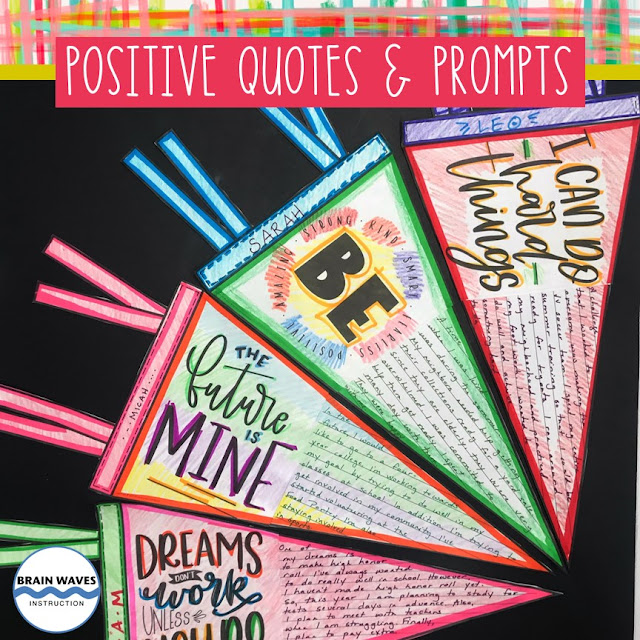
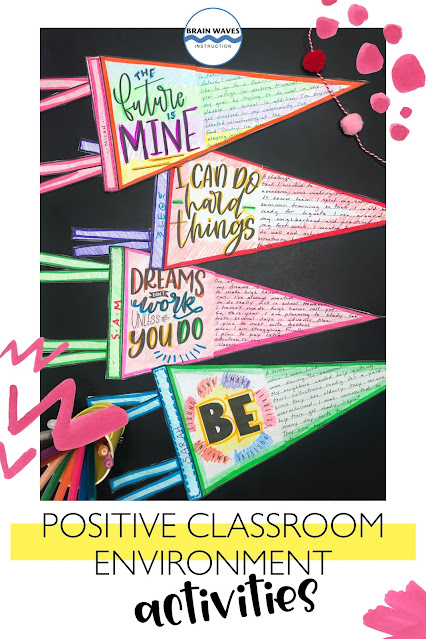
Promote positivity in the classroom with inspirational quotes and writing prompts. One way to do just that is with positive pennant flags. First, students will choose a motivational quote that inspires them. Then, they’ll respond to a writing prompt based on the quote. The writing prompt gives students a chance to pause and reflect. Finally, students combine their writing with a pennant topper with a motivational quote to make a fun and inspiring pennant flag. 

These pennant flags make incredible displays. They’re easy to create and impactful to share. Your students will love this community-building, classroom-beautifying, writing-practicing, positivity-creating activity! Check them out here.


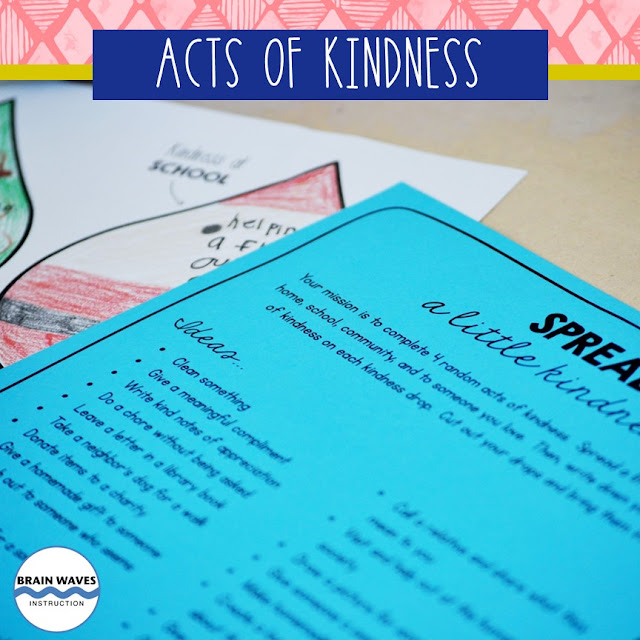
Create a "sea" of kindness in your classroom one drop at a time. Build a positive classroom community by hosting a Random Acts of Kindness challenge in your classroom to encourage students to spread kindness at school, home and in the community. In this activity, students perform four random acts of kindness and record their good deeds on “drops of kindness.” The drops of kindness can be collected and displayed in the classroom as a reminder of the power and impact of small acts of kindness.  

Get this activity (and 5 more FREE kindness activities) directly in your inbox. Just click here.


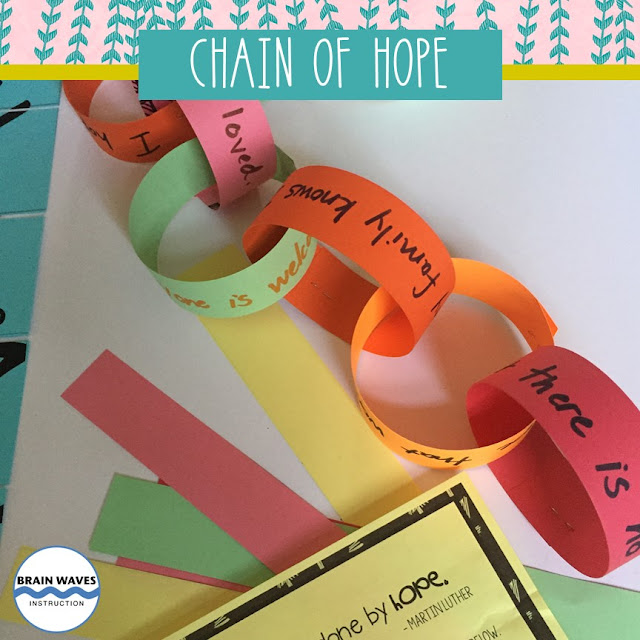
Give students a chance to investigate positive emotions like hope with the Chain of Hope activity. To begin, you have a discussion about hope with students. Students could share a time when they were hopeful and why hope is an important emotion. Then, give students a chance to create links for a classroom chain of hope. On strips of colorful paper, have students write a hope for themselves, their classroom, their community, and the world. Then, as students share their hopes, link the pieces of paper. Finally, hang the chain in the classroom. Find this activity and more here.


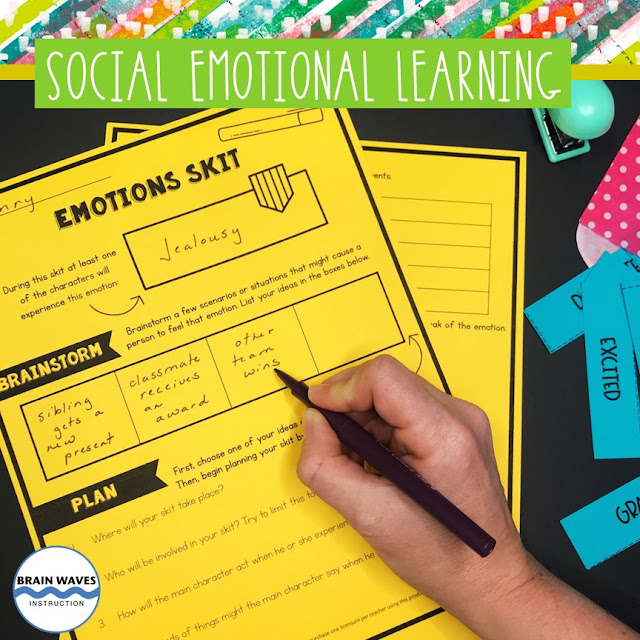
Speaking of emotions, take time to help students build their social emotional learning skills. When students have a chance to explore emotions, they build more self-awareness. As their self-awareness increases, so does their ability to show empathy, build positive relationships, and make thoughtful decisions. Social emotional learning activities are a crucial way to promote a positive classroom community.

One way to help students explore emotions is by having them work collaboratively to create an emotions skit. Assign small groups an emotion. Then, have students plan and write a script that showcases someone experiencing that emotion. Give students a chance to practice their skits before performing them for classmates. Find detailed planning pages and 5 additional social emotional learning lessons here.

--------------------------------------------------------------

I think we both agree, there's nothing better than a classroom filled with positive energy. I hope you've found a few ideas to make your students feel connected to you, their classmates, and the school community. Grab each idea at these links...

--- Free Positive Notecards

--- Free Compliment Posters

--- Positive Pennant Flags

--- Free Acts of Kindness Challenge

--- Chain of Hope (and 5 more activities)

--- Emotions Skit (and more Social Emotional Learning Ideas)


Thanks for stopping by!

Mary Beth


Day Before Winter Break ELA Plans


Oh my! This time of year can be so stressful. It's such a challenge to keep students learning and engaged in instruction with winter break on the horizon. That's why I put together a set of free lesson plans that you can use the day before winter break (or any winter day, really).

In the plans you'll find:
--- 8 different ELA activities
--- Links to all the FREE lesson ideas
--- An exclusive This or That Writing Prompt FREEBIE
--- Ideas for making the day before break special


Here's the great news...the plans include over 3 hours worth of meaningful and engaging lessons that are perfect for the day before winter break (or after, or any winter day). You can find the detailed lessons with all the FREE activity links you'll need right here.


WARM-UP

WRITING PROMPT - Start the day with a winter-themed writing prompt. Since students love choice (especially when writing), these writing prompts are always a hit! (Grab them for FREE here.)

--- Select a This or That Writing Warm-Up to share with students.

--- Give students a chance to complete the "THIS" or the "THAT" winter-themed writing prompt.

--- Students may want to share their responses with their peers.


READING

READ A MYTH - Get students engaged in reading with the myth, "How the Arctic Hare Got Short Ears." Use the myth as a springboard for discussion about the characteristics of myths and literature. (Download the myth here.)

--- Explain to students that myths deal with basic questions about the universe. Myths attempt to explain how things come to be.

--- Have students read the myth “How the Arctic Hare Got Short Ears” or any other myth.

--- Discuss the plot, characters, setting, and theme in the myth.


WRITING

WRITE A WINTER MYTH - Explain to students that they will be writing myths. Their myths will attempt to explain a characteristic/trait of a winter animal like how the reindeer got its antlers. The good news is that they will have a little help determining the story elements. They will have spinners to help provide a framework for their writing. (Download the winter myth writing materials here.)

--- Hand out the materials for students to write their own myth about a winter animal. 

--- Guide students through the pre-writing charts as they develop topics, characters, setting, and plot.

--- Allow students to turn their planning into an original winter myth.

--- Give students a chance to share their writing with peers.


GAME

PLAY WINTER PICTIONARY - Let students play a game to celebrate the winter season. Pictionary is quick and interactive. It's always a hit in the classroom.

--- Divide students into teams.

--- Give one member of each team a word to draw while their teammates guess.

--- Grab winter-themed ideas for students to draw here.


LISTENING

LISTEN TO WINTER POEMS - Give students a chance to practice their listening skills as you read winter poems out loud to students. Find some of my favorite winter poems here.

--- Read winter-themed poems out loud to students. (You might read them each more than once.)

--- Encourage students to share memorable lines or images from each poem.

--- You might let students doodle winter scenes while they listen.


REFLECTING

YEAR-END INFOGRAPHIC - Give students a chance to reflect on the calendar year as the end of the year approaches. Students will complete a brainstorm before making an infographic about their year. Find the FREE resources for this activity here.


--- Pass out the End-of-year reflection worksheet.

--- Lead students through the reflection elements.

--- Guide students as they complete their infographic.

--- Give students a chance to share.


GIFTS

HOLIDAY GIFT - Celebrate the winter season with gifts for students. 

Here are some gift ideas for students:

--- Write an individualized note to students. (Grab a set of free positive notes here.)

--- Give students a motivational quote to add to their planners, desks, or lockers.

--- Hand out free homework passes.

--- Share a sweet treat with students.

--- Find more ideas here.


MORE TIME?

Need more ideas for the day before winter break? No problem!

Here are some additional winter-themed lessons for your classroom:

--- Winter Fact Hunt and Kindness Note

--- Analyze a winter poem

--- Complete winter learning stations


---------------------------------------------------------

I hope you've found a few lesson ideas to make the day before winter break manageable, meaningful, and fun! Don't forget to download this FREE lesson plan. It has everything you'll need in one place.


Wishing you warm winter days,
Mary Beth


Thanksgiving Lessons and Thanksgiving Activities for Upper Elementary and Middle School Classrooms


If you're looking for Thanksgiving lessons that require students to think, create, and share, then you're in the right place. I'm rounding up my favorite ways to celebrate Thanksgiving in the classroom. These Thanksgiving activities are designed to honor the holiday while teaching students critical listening, speaking, reading, and/or writing skills. In other words, no fluff! 

Your students will love these engaging Thanksgiving lessons, and you'll love that they're already planned for you.

Here's a quick overview of my favorites:

--- Thanksgiving Doodle Poster and Gratitude Leaf Project

--- FREE Listening Comprehension Activity

--- 5 Reading Comprehension Learning Stations

--- Thank You Note Writing and Pockets

--- Parts of Speech Pop Art Turkey Lesson

--- Autumn Poetry Analysis Flipbooks

--- Reading Comprehension Passage


THANKSGIVING DOODLE & DO

Celebrate Thanksgiving in a meaningful and engaging way! This resource includes two activities. One activity is a Fact Hunt and Thanksgiving Doodle Infographic Poster. The other activity is an expandable gratitude leaf project. 

With these activities, students will learn about the history of Thanksgiving, interesting facts about the day, and make connections to the holiday. They’ll create a doodle infographic filled with facts and a gratitude project. Check it out here.


LISTENING COMPRHENSION ACTIVITY

In this FREE lesson, students will practice the critical skill of listening comprehension while learning about the origin of Thanksgiving as a national holiday. After a mini-lesson on what to listen for and how to take notes, students will listen to a passage about Sarah Josepha Hale two times. They’ll take notes during both readings. Then, they’ll answer questions based on their passage. Finally, they’ll create a festive piece of turkey pop art with designs and shapes based on the answers to the comprehension questions. 

This activity is a perfect way to celebrate the holiday, keep students learning, and integrate art created by Art with Jenny K. into your instruction. Download it for FREE here.


READING COMPREHENSION LEARNING STATIONS

These Thanksgiving-themed reading comprehension centers or stations are not only designed to give students meaningful opportunities to practice reading, they’re also incredibly fun and engaging!

This Thanksgiving Centers resource contains activities and lessons for 5 learning centers. Each center is designed to give students engaging and exciting learning experiences to practice, enrich, reteach, and enhance their learning. Working independently and with their small groups, student will have the opportunity to develop multiple reading comprehension skills.

Great News! The reading centers are also available as a Google Slides resource for students. Find learning stations for grades 4-5 here and grades 6-8 here.


THANK YOU NOTE WRITING

Celebrate the spirit of gratitude and thanks with this Thank You Note Writing mini-unit. This resource is all about gratitude! You’ll find resources to help your students craft a thoughtful and meaningful thank you note and create a fun Thank You Note Pocket. First, students will learn about the critical elements of thank you notes. Then, they’ll complete a brainstorm, pre-write, and rough draft before they write a final copy of their thank you notes. Finally, they’ll create a Thank You Note Pocket to place their note inside.

This resource includes two sets of writing materials. One set is for students in grades 1-3 and the other set is for students in grades 4 and beyond. Learn more here.


THANKSGIVING PARTS OF SPEECH


Make grammar especially fun on Thanksgiving with this Parts of Speech Pop Art lesson. Students will learn all about turkeys as they identify different parts of speech. Then, they'll turn their answers into art with the pop art turkey coloring page. 

Your students will love this fun and creative lesson that Art with Jenny K. and I collaborated to make. Oh, and the resource includes 11 MORE Pop Art parts of speech activities to use all year long. Click here to learn more.


AUTUMN POETRY ANALYSIS


Celebrate the autumn season with five autumn poem studies in this hands-on and engaging 5-day poetry analysis unit. Each fall poem study includes a 5-page interactive flip book that helps students deeply understand the poem. As students progress through the analysis tasks on each page of their flip books they not only dive deeper into the text, but they also develop an appreciation for closely reading poetry. 

Your students will love the interactive flip books and you’ll love how engaged students are while analyzing poetry. Digital versions included. See them all here.


READING COMPREHENSION PASSAGE


Here's another fun way to celebrate Thanksgiving in the classroom. Have students read about the Great Turkey Pardon as they practice summarizing skills. Then, watch their learning come alive as they turn their answers into bold art work. Students will literally put the ART into English Language Arts (just the way Art with Jenny K. and I like it.) 

Check out this differentiated set of reading passages perfect for Thanksgiving (and any time of the year) right here.

--------------------------------------

Well, there you have it...my favorite lessons to celebrate Thanksgiving in the classroom. I hope you found some that your students will love. Don't forget to grab this FREE Thanksgiving Listening passage.

Wishing you a wonderful holiday!
Mary Beth


Social Emotional Learning Activities for Upper Elementary and Middle School Students


Social Emotional Learning (SEL) has been found to promote academic success and increase students' commitment to school. Generally, there are five key components that make up social emotional learning. These competencies include self-awareness, self-management, social awareness, relationship skills, and decision making. 

Today, I'd like to focus on ways to help students develop self-awareness. Self-awareness includes one's ability to recognize emotions, have an accurate self-perception, identify strengths, develop confidence, and show self-efficacy. 

Researchers have found that a student's ability to control his or her feelings, thoughts, and behaviors can be linked to academic success. So, let's take a look at some easy ways to help students develop an awareness of their individual characteristics and personal emotions.


All About Me - A - Z

This activity helps students to define and identify a variety of aspects about themselves. They'll create a list about themselves with a characteristic, quality, or emotion for each letter of the alphabet. 

Materials: Piece of paper, pen or pencil

Directions:

  • - On a piece of paper, have students create two columns. (Or grab a ready-made poster here.)
  • - Have them write all the letters of the alphabet in each column. 
  • - Then, challenge them to write something about themselves for each letter. For instance, they might write "gregarious" for G or "curious" for C. 


Ideas:

  • - Share your own A to Z list with students first.
  • - Create a class list of emotions and descriptive words to get students started.
  • - Assemble students' finished lists in a class book.


Moment of Mindfulness

Mindfulness is a great way to build self-awareness. Since mindfulness is all about paying attention to the present moment, it's a great way for students to pause and reflect on how they are feeling, what they are thinking, and what they need in the present. It's simple to do too! 

Ways to take a moment of mindfulness:

  • - At the beginning of class, have students close their eyes and take several deep breaths. Ask students to pay attention to their breathing.
  • - Share a mindfulness quote with students to help focus students' thoughts during a moment of mindfulness.
  • - Pause during instruction and have students do a self-awareness check. Encourage them to be mindful of their thoughts and feelings.


Reflective Journaling

Reflective journaling is a powerful way to help students become self-aware. With targeted writing prompts, students can develop insight into their feelings, make sense of their experiences, and build clarity on their thoughts. When students write about their own experiences and feelings, they become more self-aware.

Materials:

  • - A notebook and/or computer, pen or pencil, writing prompts
  • - A list of writing prompts that spark self-reflection, these might include: 
  • --- Write about a time when you were proud of yourself.
  • --- List ten things that make you feel excited.
  • --- Reflect on how you have changed this year.
  • --- What is something that you find challenging?
  • (Check out a set of 10 engaging prompts here.)

Ideas:

  • - Have students respond to their prompts as if they are writing a letter to themselves..."Dear me..."
  • - Read students' responses and respond to their writing in the margins. Add questions and positive notes at the end of their writing to build connections and spark further reflections.
  • - Schedule a time each day or week for journaling to make it an intentional part of your classroom community.


Growth Mindset

There are many ways to help students develop a growth mindset. When students develop an understanding that all forms of intelligence are malleable, they are inspired to work toward success. That's why it is so powerful to infuse lessons about growth mindset into instruction. Giving students a moment to reflect on their own mindsets builds self-awareness.

Materials:

  • - Short lessons or articles about Growth Mindset to help students understand the differences between a fixed and growth mindset.
  • - Series of questions about students' own mindsets.

Directions:

Ideas:

  • - Share and display inspirational quotes about growth mindset. (I particularly love paper desk tents. They are an easy way to display quotes right on students' desks.)


Emotions Skits

Researchers have noted that there are at least six universal emotions. These include happiness, sadness, anger, surprise, fear, and disgust. Help students investigate and demonstrate these universal emotions by challenging them to write a short play or skit that involves a character or many characters experiencing one of the universal emotions.

Materials:


Ideas:

  • - Review the six universal emotions with students. As a class have students brainstorm what each emotion looks like (how people look when they are experiencing that emotion) and sounds like (what people might say when experiencing that emotion).
  • - Brainstorm situations where people might feel each emotion. Encourage students to share personal situations when they felt a certain way.
  • - Divide students into small groups. Secretly assign each group an emotion.
  • - Challenge students to write a script that their small group could act out for the class that demonstrates that emotion.
  • - Have small groups perform for the class. Have the audience identify the emotion prevalent in the skit.


Self Check-In

Daily feelings check-ins are a great way to build self-awareness. When students are given the opportunity to assess how they are feeling and share their emotions with others, they begin to know themselves more fully. Self check-ins also help normalize feelings. 

Materials:
  • - Paper with an open grid shape
  • - List of feelings

Directions:
  • - Pass out the gridded paper to students.
  • - Have them fill the grid with different emotions.
  • - Then, have students display the grid on their desks.
  • - Have them place a token or shape on the emotion that shows how they are feeling at a particular moment.


Ideas:
  • - Once students can recognize their feelings, help them to develop strategies for regulating their emotions.
  • - Encourage students to track their feelings over an entire school day. Then, discuss how feelings change in different situations.

--------------------------------------------------

I hope you've found a few ways to help students develop self-awareness. Incorporating lessons that target social emotional learning is essential in today's classrooms. If you're looking for ready-made resources, check out this set of 10 SEL reading passages and this set of 6 Self-Awareness Activities

Thanks for stopping by!
Mary Beth


Pop Up

Related Posts Plugin for WordPress, Blogger...